
BSOP header
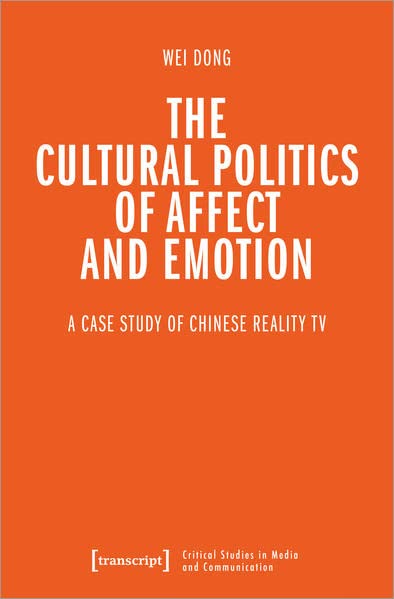
Amazon cover image
Image from Amazon.com

The cultural politics of affect and emotion : a case study of Chinese reality TV / Wei Dong.

By: Series: Critical studies in media and communication ; Bd. 28.Publisher: Bielefeld : Transcript, 2022Description: 1 online resourceContent type:
  • text
Media type:
  • computer
Carrier type:
  • online resource
ISBN:
  • 9783732862849
  • 3732862844
Subject(s): Additional physical formats: Print version:: Cultural politics of affect and emotion.DDC classification:
  • 791.456 23
LOC classification:
  • PN1992.8.R43
Online resources: Dissertation note: Dissertation Freie Universität Berlin 2021. Summary: "Against the background of the media commercialization reform since the 1990s in China and drawing on the case of "X-Change" (2006-2019), Wei Dong investigates the affective meaning-making mechanism in the multimodal text of Chinese reality TV. The focus lies on the ways in which emotions are appropriated and disciplined by regimes of power and identity, and the ways in which affect - in this case primarily kuqing (bitter emotions) communicated by the material and the body - have the potential to challenge or exceed existing relations of power in the mediascape. Wei Dong shows how Chinese reality TV provides a historical and theoretical opportunity for understanding the affective structures of contemporary China in the dynamic process of fracture and integration."-- Provided by publisher
Tags from this library: No tags from this library for this title. Log in to add tags.
Star ratings
    Average rating: 0.0 (0 votes)
Holdings
Item type Current library Status
eBooks Digital Library Available

Open Access EbpS

Dissertation Freie Universität Berlin 2021.

"Against the background of the media commercialization reform since the 1990s in China and drawing on the case of "X-Change" (2006-2019), Wei Dong investigates the affective meaning-making mechanism in the multimodal text of Chinese reality TV. The focus lies on the ways in which emotions are appropriated and disciplined by regimes of power and identity, and the ways in which affect - in this case primarily kuqing (bitter emotions) communicated by the material and the body - have the potential to challenge or exceed existing relations of power in the mediascape. Wei Dong shows how Chinese reality TV provides a historical and theoretical opportunity for understanding the affective structures of contemporary China in the dynamic process of fracture and integration."-- Provided by publisher

Includes bibliographical references.

Print version record.

WorldCat record variable field(s) change: 050, 082, 650

Share
BSOP

Biblical Seminary of the Philippines
  All rights Reserved
  © 2024

CONTACT INFORMATION

Biblical Seminary of the Philippines,
  77-B Karuhatan Road, Valenzuela City,
  PHILIPPINES 1441
  Phone: +632 8292-6795 / 8292-6798
  Fax : +632 8292-6675
  Email: library@bsop.edu.ph