
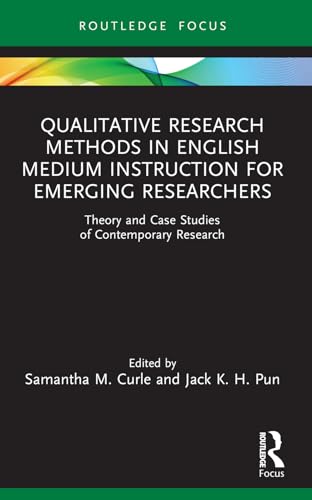
Qualitative Research Methods in English Medium Instruction for Emerging Researchers : theory and case studies of contemporary research / edited by Samantha Curle and Jack Pun.
Series: Qualitative and visual methodologies in educational researchPublisher: New York : Routledge, c2024Edition: First editionDescription: xi, 135 pages : illustrations ; 22 cmContent type:- text
- unmediated
- volume
- 9781032451329
| Item type | Current library | Shelving location | Call number | Status | Barcode | |
|---|---|---|---|---|---|---|
 Books
Books
|
BSOP Library | Reference | LB2331.25 Q25 2023 (Browse shelf(Opens below)) | Available | 00061843 |
Includes bibliographical references and index.
Introduction: qualitative research methods in English-medium instruction for emerging researchers 1. Using Q methodology to better understand subjectivity in EMI 2. How to conduct a multimodal classroom discourse analysis 3. The use of epistemic network analysis in analysing classroom discourse in EMI-science classrooms 4. Using corpus linguistics and grounded theory to explore EMI stakeholders' discourse 5. Affordances of conversation analysis for investigating EMI classroom talk 6. Moving beyond language in EMI research: a multimodal and multichannel analytical framework to visualise classroom practices 7. A narrative enquiry into EMI instructors’ linguistic and pedagogical needs 8. Engaged methodological approach in the study of language ideologies in EMI policies
"This timely book will guide researchers on how to apply qualitative research methods to explore English Medium Instruction (EMI) issues such as classroom interactions, teachers' and students' perceptions on language and pedagogical challenges, and stakeholders' views on the implementation of EMI. Each chapter focuses on a specific type of qualitative research methodology, beginning with an overview of the research and the method used, before presenting a unique case study. Chapters will also identify the process that EMI researchers went through to conduct their research, key dilemmas they faced, and focus particularly on the methodological issues they encountered. By exploring these issues and providing up-to-date insights in contexts across the globe, this book informs theory or the lack thereof, underlying research into the phenomenon of EMI. This text will be indispensable for researchers who want to learn and acquire skills in conducting qualitative research in EMI, as well as undergraduate and postgraduate students reading in the fields of applied linguistics and language education"--