
BSOP header
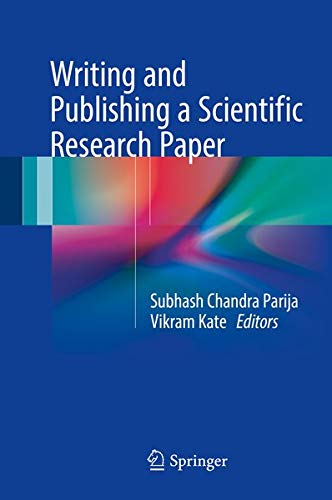
Amazon cover image
Image from Amazon.com

Writing and publishing a scientific research paper [electronic resource] / edited by Subhash Chandra Parija, Vikram Kate.

Contributor(s): Publication details: Springer Singapore : Imprint: Springer, c2017.Edition: 1st ed. 2017Description: 1 online resource (XVII, 195 pages 51 illustrations, 39 illustrations in color.)Content type:
  • text
Media type:
  • computer
Carrier type:
  • online resource
ISBN:
  • 9789811047206
Subject(s): Genre/Form: Additional physical formats: Print version:: Writing and publishing a scientific research paper; Printed edition:: No title; Printed edition:: No title; Printed edition:: No titleOnline resources:
Contents:
Foreword; Writing and publishing a scientific research paper; Preface; Acknowledgements; Contents; Editors and Contributors; About the Editors; Part I: Writing a Scientific Research Paper; 1: Why Write a Scientific Research Paper; 1.1 History of Scientific Writing; 1.2 Need for Scientific Research Paper; 1.2.1 To Develop a Scientific Writing Skill; 1.2.2 To Connect with Senior Colleagues; 1.2.3 To Enhance Academic Career; 1.2.4 Improves Job Opportunity; 1.2.5 Benefits for Senior Researchers; 1.2.6 Guides Future Research; 1.2.7 Provide Reliable Scientific Information. 1.3 Moral Responsibility of the ResearcherReferences; 2: Components and Structure of a Manuscript; 2.1 Background; 2.2 Introduction; 2.3 Methodology; 2.4 Results; 2.5 Discussion; 2.6 Acknowledgment; 2.7 References; Case Scenario; References; 3: Title; 3.1 Introduction; 3.2 Title; 3.3 Importance of Writing a Relevant Title; 3.4 There Are Three Basic Rules to Be Followed While Writing a Title; 3.5 Types of Titles; 3.6 Running Title; 3.7 Title Page; 3.8 Covering Letter; 3.9 Attributes of a Good Title, Running Title, and Covering Letter; 3.10 Conclusions; Case Scenario. 5.1 Why Introduce?5.2 Ingredients of Introduction; 5.3 Structure of Introduction; 5.4 Don'ts for Introduction; 5.5 When to Write the Introduction; 5.6 Conclusion; Case Scenario; References; 6: Methods; 6.1 Characteristics of Ideal Methods Section; 6.1.1 Precise and Meticulous; 6.1.2 Structured or Unstructured; 6.1.3 Avoid Shifting of Voices (Active and Passive) Inside the Paragraph; 6.2 Components of the Methods Section; 6.3 Subjects Used in the Study; 6.4 Study Environment, Time Span of Study, and Study Design; 6.5 Materials Used in the Study. 6.6 Ethical Clearance/Informed Consent6.7 Research Protocol (Intervention and Outcome Measures); 6.7.1 Intervention; 6.7.2 Outcome; 6.7.3 Validity and Reproducibility; 6.8 Data/Statistical Analysis; 6.9 Conclusion; Scenario; References; 7: Results; 7.1 Results; 7.1.1 Introduction; 7.2 Tables; 7.3 Charts; 7.3.1 Bar Charts; 7.3.1.1 Types of Bars; 7.3.2 Histograms; 7.3.3 Pie Charts; 7.3.4 Line Graphs; 7.3.5 Scatter Plot; 7.3.6 Photographs and Photomicrographs; Case Scenario; Suggested References for Further Reading; 8: Discussion and Conclusion; 8.1 First Paragraph
Summary: This book covers all essential aspects of writing scientific research articles, presenting eighteen carefully selected titles that offer essential, "must-know" content on how to write high-quality articles. The book also addresses other, rarely discussed areas of scientific writing including dealing with rejected manuscripts, the reviewer's perspective as to what they expect in a scientific article, plagiarism, copyright issues, and ethical standards in publishing scientific papers. Simplicity is the book's hallmark, and it aims to provide an accessible, comprehensive and essential resource for those seeking guidance on how to publish their research work. The importance of publishing research work cannot be overemphasized. However, a major limitation in publishing work in a scientific journal is the lack of information on or experience with scientific writing and publishing. Young faculty and trainees who are starting their research career are in need of a comprehensive guide that provides all essential components of scientific writing and aids them in getting their research work published.

Tags from this library: No tags from this library for this title. Log in to add tags.
Star ratings
    Average rating: 0.0 (0 votes)
Holdings
Item type Current library Status
eBooks Digital Library Available

Foreword; Writing and publishing a scientific research paper; Preface; Acknowledgements; Contents; Editors and Contributors; About the Editors; Part I: Writing a Scientific Research Paper; 1: Why Write a Scientific Research Paper; 1.1 History of Scientific Writing; 1.2 Need for Scientific Research Paper; 1.2.1 To Develop a Scientific Writing Skill; 1.2.2 To Connect with Senior Colleagues; 1.2.3 To Enhance Academic Career; 1.2.4 Improves Job Opportunity; 1.2.5 Benefits for Senior Researchers; 1.2.6 Guides Future Research; 1.2.7 Provide Reliable Scientific Information. 1.3 Moral Responsibility of the ResearcherReferences; 2: Components and Structure of a Manuscript; 2.1 Background; 2.2 Introduction; 2.3 Methodology; 2.4 Results; 2.5 Discussion; 2.6 Acknowledgment; 2.7 References; Case Scenario; References; 3: Title; 3.1 Introduction; 3.2 Title; 3.3 Importance of Writing a Relevant Title; 3.4 There Are Three Basic Rules to Be Followed While Writing a Title; 3.5 Types of Titles; 3.6 Running Title; 3.7 Title Page; 3.8 Covering Letter; 3.9 Attributes of a Good Title, Running Title, and Covering Letter; 3.10 Conclusions; Case Scenario. 5.1 Why Introduce?5.2 Ingredients of Introduction; 5.3 Structure of Introduction; 5.4 Don'ts for Introduction; 5.5 When to Write the Introduction; 5.6 Conclusion; Case Scenario; References; 6: Methods; 6.1 Characteristics of Ideal Methods Section; 6.1.1 Precise and Meticulous; 6.1.2 Structured or Unstructured; 6.1.3 Avoid Shifting of Voices (Active and Passive) Inside the Paragraph; 6.2 Components of the Methods Section; 6.3 Subjects Used in the Study; 6.4 Study Environment, Time Span of Study, and Study Design; 6.5 Materials Used in the Study. 6.6 Ethical Clearance/Informed Consent6.7 Research Protocol (Intervention and Outcome Measures); 6.7.1 Intervention; 6.7.2 Outcome; 6.7.3 Validity and Reproducibility; 6.8 Data/Statistical Analysis; 6.9 Conclusion; Scenario; References; 7: Results; 7.1 Results; 7.1.1 Introduction; 7.2 Tables; 7.3 Charts; 7.3.1 Bar Charts; 7.3.1.1 Types of Bars; 7.3.2 Histograms; 7.3.3 Pie Charts; 7.3.4 Line Graphs; 7.3.5 Scatter Plot; 7.3.6 Photographs and Photomicrographs; Case Scenario; Suggested References for Further Reading; 8: Discussion and Conclusion; 8.1 First Paragraph

This book covers all essential aspects of writing scientific research articles, presenting eighteen carefully selected titles that offer essential, "must-know" content on how to write high-quality articles. The book also addresses other, rarely discussed areas of scientific writing including dealing with rejected manuscripts, the reviewer's perspective as to what they expect in a scientific article, plagiarism, copyright issues, and ethical standards in publishing scientific papers. Simplicity is the book's hallmark, and it aims to provide an accessible, comprehensive and essential resource for those seeking guidance on how to publish their research work. The importance of publishing research work cannot be overemphasized. However, a major limitation in publishing work in a scientific journal is the lack of information on or experience with scientific writing and publishing. Young faculty and trainees who are starting their research career are in need of a comprehensive guide that provides all essential components of scientific writing and aids them in getting their research work published.

Share
BSOP

Biblical Seminary of the Philippines
  All rights Reserved
  © 2024

CONTACT INFORMATION

Biblical Seminary of the Philippines,
  77-B Karuhatan Road, Valenzuela City,
  PHILIPPINES 1441
  Phone: +632 8292-6795 / 8292-6798
  Fax : +632 8292-6675
  Email: library@bsop.edu.ph